
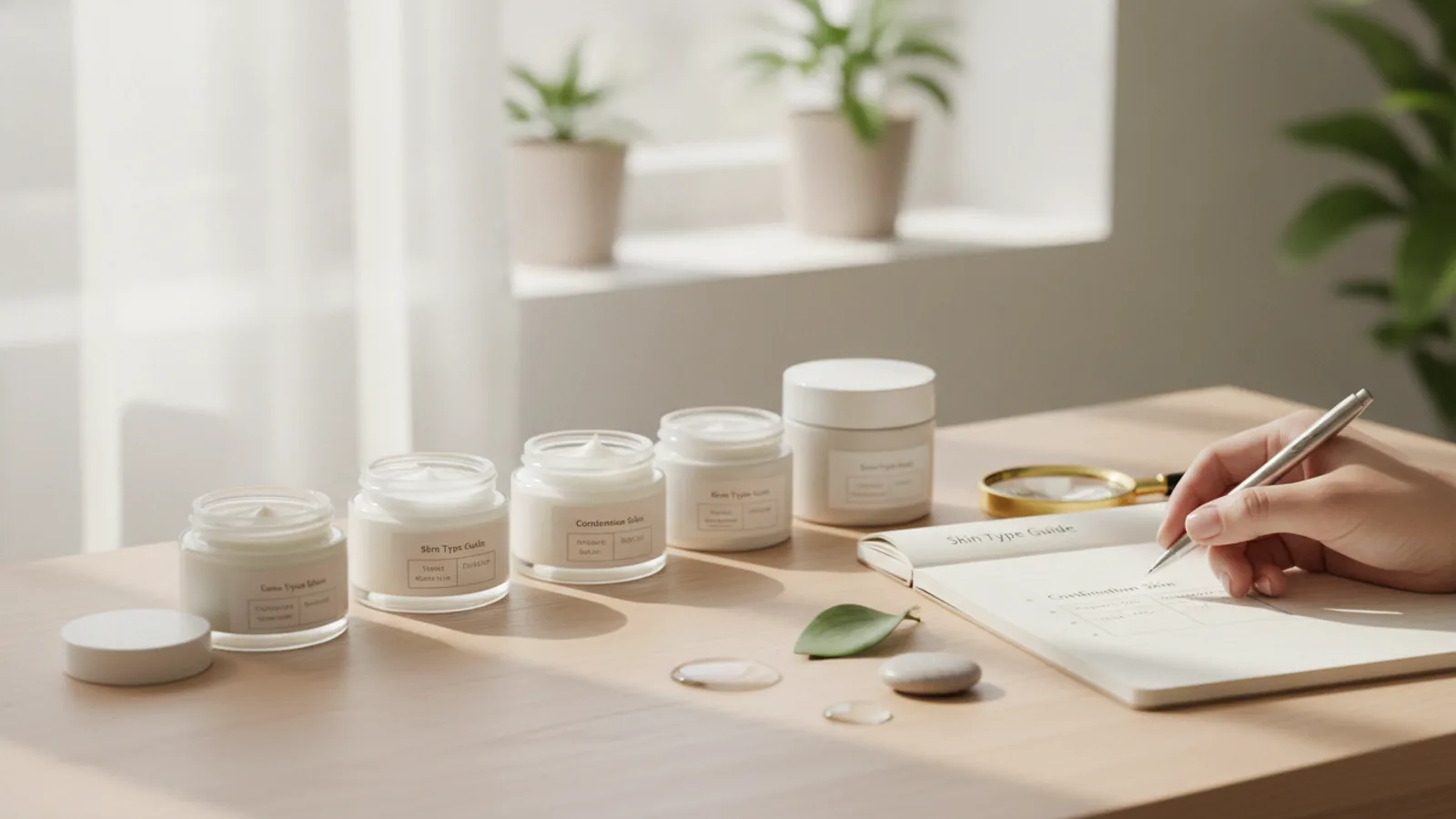
How To Choose A Moisturizer For Combination Skin
Finding the right moisturizer for combination skin can feel like a puzzle. When your face has both oily areas (like the T-zone) and dry patches (often the cheeks), a single product needs to work twice as hard. This guide helps you understand exactly what your unique skin needs, how to read ingredient labels with confidence, and a clear process for testing new products. Our step-by-step instructions will help you choose a moisturizer that hydrates dry spots and balances oily ones, leaving your skin feeling calm and comfortable.
Fast Answer
- Ideal Formula: Look for a lightweight, oil-free, and non-comedogenic lotion or gel-cream.
- Key Ingredients: Seek out hyaluronic acid for hydration, niacinamide for oil control and calming, and ceramides to support the skin barrier.
- Top Priority: Always patch test a new product on a small area of skin for 24-48 hours before applying it to your entire face to check for irritation.
Before You Start
- A gentle facial cleanser to start with a clean base.
- A clear understanding of your skin's oily and dry zones.
- Access to product ingredient lists, either in-store or online.
- Patience for a trial period—it can take a few weeks for your skin to adjust.
Step-by-Step Instructions
Identify Your Skin’s Unique Pattern
The first step is to get to know your skin’s specific needs. Combination skin isn't the same for everyone. To see your pattern clearly, wash your face with a mild, gentle cleanser, pat it dry, and wait about 30 to 60 minutes. Do not apply any other products.
Now, observe your skin in good lighting. Notice where shine or oil has appeared—this is typically the T-zone (forehead, nose, and chin). Then, notice where your skin feels tight, looks dull, or feels slightly rough. These are your dry areas, most commonly the cheeks and around the jawline. Understanding this map of your face is crucial for picking the right product.
Learn to Recognize the Right Textures
Moisturizers come in different textures, and for combination skin, texture is everything. A product that’s too heavy can clog pores in your T-zone, while one that’s too light won't be enough for your dry cheeks. Here are the most common types:
- Gel-Creams: These are often the perfect match for combination skin. They have the lightweight, fast-absorbing feel of a gel but with the lasting hydration of a cream.
- Lightweight Lotions: Lotions have a higher water content than creams, making them a great choice. They provide balanced moisture without feeling heavy or greasy.
- Gels: These are water-based and typically oil-free, making them excellent for very oily T-zones. However, they may not provide enough moisture for drier areas on their own.
- Creams: Traditional creams are thicker and contain more oil. They are usually too rich for the oily parts of combination skin and are best reserved for very dry skin types or for targeted use on extremely dry patches.
Start your search by focusing on gel-creams and lightweight lotions, as they offer the most balanced care for combination skin.
Decode the Ingredient Label for Helpful Ingredients
Once you've narrowed down the texture, it's time to look at the ingredients. Don't be intimidated by the long list—you only need to look for a few key players that are known to benefit combination skin. Look for these names near the top of the ingredients list, as that indicates a higher concentration.
- Hyaluronic Acid: A powerful humectant, which means it draws moisture from the air into your skin. It provides incredible hydration without adding any oil, making it perfect for both your oily and dry areas.
- Niacinamide (Vitamin B3): This is a true powerhouse for combination skin. It helps regulate oil production, which is great for your T-zone, while also calming redness and strengthening the skin barrier, which benefits your dry cheeks.
- Glycerin: Another effective humectant that helps the skin retain moisture. It’s gentle and commonly found in many well-formulated moisturizers.
- Ceramides: These are lipids (fats) that are naturally found in skin and help form its protective barrier. A moisturizer with ceramides will help lock in moisture and protect the drier parts of your face from irritation.
Know Which Ingredients to Avoid
Just as important as what you look for is what you avoid. Certain ingredients can make combination skin worse by either clogging pores in the T-zone or drying out the cheeks. Keep an eye out for these potential troublemakers.
- Heavy Oils and Butters: Ingredients like coconut oil, shea butter, and cocoa butter can be too rich and may lead to clogged pores and breakouts in your T-zone.
- Denatured or SD Alcohol: Often found in products for oily skin, these types of alcohol can give a quick-drying, matte feel but are very harsh. They can strip moisture from your dry areas and may even trigger your oily areas to produce more oil to compensate.
- Fragrance and Dyes: Synthetic fragrances and colorants are common causes of skin sensitivity and allergic reactions. To be safe, opt for formulas labeled "fragrance-free."
- Harsh Exfoliants: While exfoliating is important, avoid moisturizers that contain aggressive physical scrubs or high concentrations of exfoliating acids, as they can cause irritation.
Look for products labeled as "non-comedogenic," which means they are specifically formulated not to clog pores. This is one of the most important labels for combination skin.
Perform a Patch Test Before Full Use
This is a non-negotiable step before trying any new skincare product. A patch test helps you see if your skin will have a negative reaction before you apply the moisturizer all over your face. It's a simple process that can save you from widespread redness, itching, or breakouts.
- Apply a small, pea-sized amount of the new moisturizer to a discreet area of skin. Good spots include the side of your neck, behind your ear, or on your jawline.
- Leave the product on and wait for 24 to 48 hours. Do not wash the area if possible.
- After the time has passed, check the area for any signs of irritation, such as redness, bumps, itching, or burning.
If the area looks and feels completely normal, the product is likely safe for you to use on your face. If you experience any irritation, wash the product off immediately and do not use it again.
Give the Moisturizer a Proper Trial Period
Skincare is a marathon, not a sprint. You won't know if a moisturizer is truly right for you after just one or two uses. Your skin needs time to adjust to a new formula. Commit to using the new moisturizer consistently for at least two to four weeks before making a final decision, unless you experience a negative reaction.
During this trial period, pay close attention to how your skin feels and looks. A successful moisturizer for combination skin will:
- Make your dry areas feel comfortable, soft, and hydrated all day.
- Help your T-zone look balanced and less shiny, without feeling stripped or dry.
- Not cause any new breakouts, clogged pores, or irritation.
- Absorb well and create a smooth base for sunscreen or makeup.
If after a month your skin feels balanced and healthy, you’ve likely found a winner!
Common Problems and Solutions
Even with careful selection, you might run into a few issues. Here’s how to troubleshoot some common problems when choosing a moisturizer for combination skin.
- "My T-zone still feels greasy during the day."
This could mean your moisturizer is still a bit too rich for your oily areas. Try using a smaller, pea-sized amount. If that doesn't help, consider switching to an even lighter, pure gel formula for your T-zone. - "My cheeks still feel tight and dry."
If your dry areas need more support, your moisturizer may be too light. You don't necessarily have to start over. Try applying a second thin layer just on your cheeks, or consider the "zoning" technique (see Advanced Tips). - "I started getting small bumps or breakouts."
Stop using the product immediately. This is a clear sign that an ingredient is not agreeing with your skin or is clogging your pores. Re-examine the ingredient list for anything comedogenic and look for a simpler, oil-free formula next time. - "The moisturizer pills or balls up on my skin."
This usually happens for one of two reasons: you're applying too much product, or you're not letting previous skincare layers (like a serum) fully absorb. Try using less moisturizer and waiting a minute between applying different products.
Advanced Tips for Combination Skin
Once you've mastered the basics, you can try these techniques to further refine your routine and get the most out of your moisturizer.
- Try "Zoning" Your Skincare: This is a highly effective method for combination skin. It involves using two different moisturizers for the different zones of your face. You would apply a lightweight, oil-free gel on your T-zone and a slightly more nourishing (but still non-comedogenic) lotion or cream on your drier cheeks. It adds an extra step but delivers truly customized care.
- Adjust Your Moisturizer for the Season: Your skin’s needs can change dramatically between summer and winter. You may find that a lightweight gel-cream is perfect for the humid summer months, but you need to switch to a more hydrating lotion during the dry, cold winter to keep your cheeks from feeling tight.
- Always Follow with Sunscreen: No skincare routine is complete without sun protection. In the morning, your moisturizer should always be the last step before applying a broad-spectrum sunscreen with an SPF of 30 or higher. Some moisturizers come with SPF, which can be a great time-saver, but ensure the formula works for your combination skin.
Quick Reference
| Situation | Look for this | Why |
|---|---|---|
| Oily T-zone, normal cheeks | A single lightweight gel-cream or lotion | Provides balanced hydration for the whole face without feeling heavy or greasy. |
| Oily T-zone, very dry/flaky cheeks | Two products: a gel for the T-zone, and a non-comedogenic cream for cheeks | This "zoning" approach targets the specific needs of each area without compromise. |
| Acne-prone combination skin | An oil-free, non-comedogenic formula with niacinamide or salicylic acid | Hydrates the skin while helping to control oil, calm inflammation, and keep pores clear. |
| Sensitive combination skin | A fragrance-free formula with calming ingredients like ceramides, cica, or oat extract | Minimizes the risk of irritation while supporting a healthy skin barrier. |
How To Choose A Moisturizer For Combination Skin FAQ
Do I really need to moisturize my oily T-zone?
Yes, absolutely. Oily skin can often be dehydrated, meaning it lacks water. When your skin is dehydrated, it can overproduce oil to compensate, which can make your T-zone even shinier. Using a lightweight, oil-free moisturizer adds water back into the skin, helping it become more balanced over time.
Can I just use a moisturizer for "normal" skin?
You can try, but you may find it's not a perfect fit. A moisturizer for normal skin might not be lightweight enough for your T-zone, potentially leading to shine or clogged pores. It's usually best to choose a product specifically designed to address the dual needs of combination skin.
What is the difference between "fragrance-free" and "unscented"?
"Fragrance-free" means the product contains no added fragrances. "Unscented" means the product may contain masking chemicals to cover up the smell of the raw ingredients. For sensitive skin, fragrance-free is always the safer choice.
How much moisturizer should I be using?
A little goes a long way. A pea-sized to dime-sized amount is typically enough for your entire face and neck. Applying too much can lead to a greasy feeling and cause the product to pill. Start with a small amount and add more only if needed.
Final Checklist for Choosing a Moisturizer
- I have observed my skin and know where my oily and dry zones are.
- I am looking for a lightweight texture, like a gel-cream or lotion.
- I will check labels for beneficial ingredients like hyaluronic acid and niacinamide.
- I will avoid products with heavy oils, drying alcohols, and added fragrance.
- I will prioritize formulas that are labeled "non-comedogenic" and "oil-free."
- I have a plan to patch test any new product for at least 24 hours.
- I will use the moisturizer consistently for 2-4 weeks to fairly evaluate its performance.