
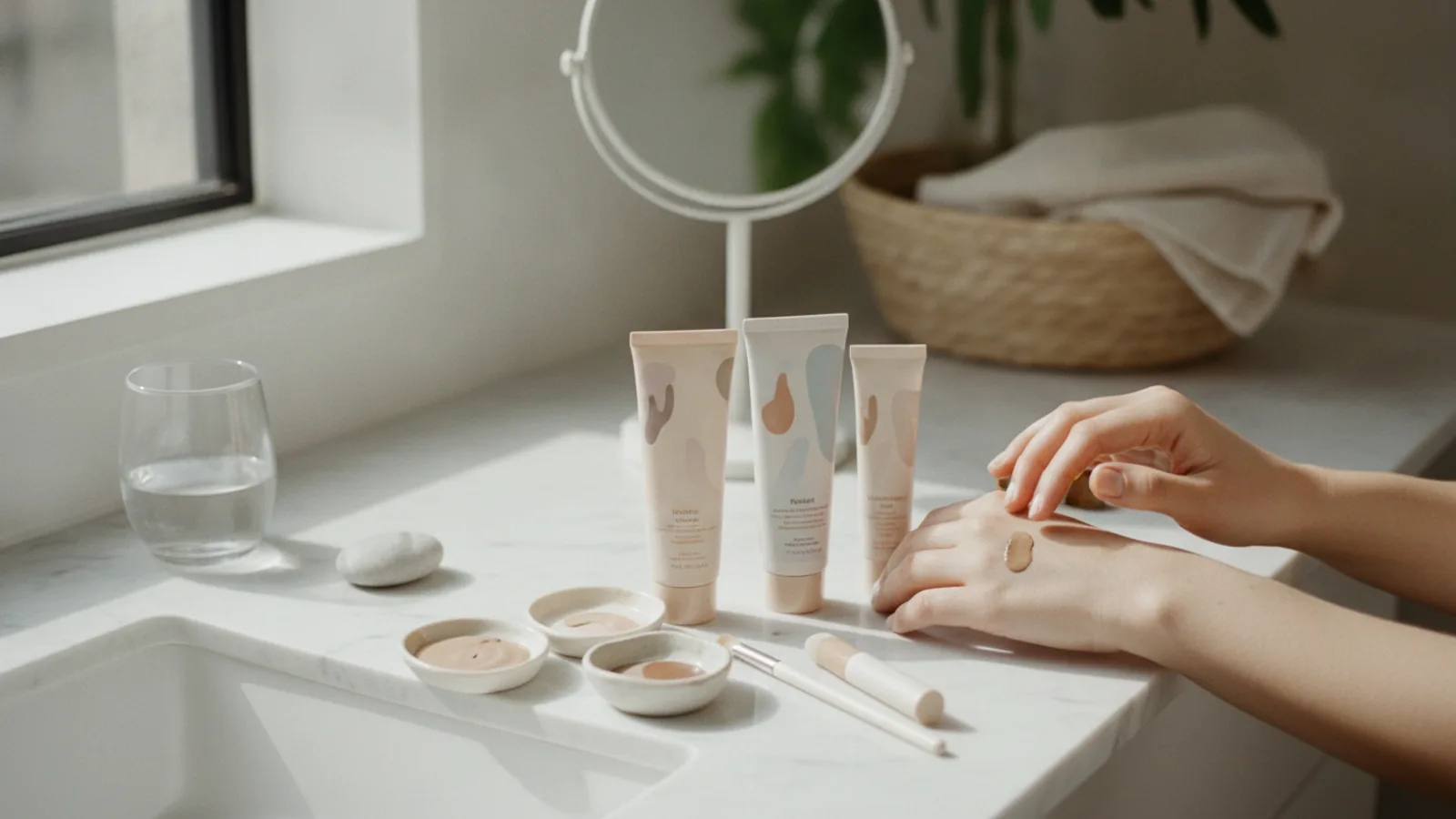
How To Choose A Tinted Moisturizer
Choosing the right tinted moisturizer can feel overwhelming, but it’s a simple process of matching a product to your unique skin. This guide helps you find a formula that provides light coverage, hydration, and a healthy glow, simplifying your daily routine. It's perfect for anyone wanting a natural, "your skin but better" look without the weight of a traditional foundation. We'll walk through identifying your skin's needs, finding the perfect shade, and understanding key ingredients to make a confident choice.
Fast Answer
- Identify Your Skin Type: Match the formula to oily, dry, combination, or sensitive skin.
- Select Coverage & Finish: Decide between sheer or light coverage with a dewy, matte, or natural finish.
- Find Your Shade Match: Test 2-3 shades on your jawline and check them in natural daylight.
- Check for SPF: Prioritize formulas with broad-spectrum SPF 30 or higher for daily protection.
- Read the Ingredients: Look for beneficial ingredients like hyaluronic acid for hydration or niacinamide for calming.
Before You Start
Finding the perfect tinted moisturizer starts with a little self-knowledge about your skin. This isn't about finding flaws; it's about understanding what your skin loves so you can choose a product that makes you feel comfortable and confident. Taking a few moments to assess your needs will make the selection process simple and successful.
- A clear understanding of your current skin type (e.g., oily in the T-zone, dry on the cheeks).
- Knowledge of your skin's undertones (cool, warm, or neutral).
- A list of your primary skin goals (e.g., more hydration, sun protection, evening out redness).
- Access to a mirror in a room with good natural light for accurate shade matching.
Step-by-Step Instructions
Identify Your Skin Type and Main Concerns
The foundation of a good choice is understanding your skin. A tinted moisturizer is part skincare, part makeup, so its formula must be compatible with your skin type to perform well.
- Oily Skin: Tends to look shiny and feel greasy, especially in the T-zone (forehead, nose, and chin). Look for formulas labeled "oil-free" and "non-comedogenic" (won't clog pores) with a matte or natural finish.
- Dry Skin: Often feels tight, may have flaky patches, and craves moisture. Choose hydrating formulas with ingredients like hyaluronic acid or glycerin. A dewy or radiant finish will impart a healthy-looking glow.
- Combination Skin: Features both oily areas (usually the T-zone) and dry areas (often the cheeks). A formula with a natural or satin finish that balances hydration without adding excess oil is ideal.
- Sensitive Skin: Can be easily irritated, leading to redness or itchiness. Opt for fragrance-free and hypoallergenic formulas with soothing ingredients like niacinamide or aloe. Mineral-based sunscreens (zinc oxide, titanium dioxide) are often less irritating than chemical ones.
Consider your primary concerns as well. Do you want to calm redness, blur large pores, or add a boost of brightness? Many tinted moisturizers include ingredients targeted for these specific needs.
Determine Your Desired Coverage Level
Tinted moisturizers are known for their light touch, but coverage levels still vary. Think about what you want the product to do for your skin on a typical day.
- Sheer Coverage: This is the most transparent option. It offers a whisper of color to create a fresh, "no-makeup" look. It won't hide major imperfections but will give your skin a more uniform and polished appearance. It’s perfect for days when you just want a little something to look put-together.
- Light Coverage: This level effectively evens out skin tone and minimizes minor redness or discoloration. It still allows your natural skin, including freckles, to show through. Most tinted moisturizers fall into this category.
- Buildable Coverage: Some formulas can be layered for more coverage in specific areas, moving from light toward medium. This offers versatility, allowing you to customize your look without reaching for a separate concealer.
Choose the Right Finish for Your Look
The "finish" describes how the product looks on your skin once it has set. This choice is part personal preference and part skin-type compatibility.
- Dewy/Radiant Finish: This finish reflects light, giving the skin a luminous, hydrated, and healthy glow. It's an excellent choice for dry or mature skin, as it can make skin appear more plump and youthful. It can sometimes emphasize texture on very oily skin.
- Matte Finish: This finish has little to no shine, providing a velvety, smooth appearance. It’s ideal for oily and combination skin as it helps control excess shine throughout the day.
- Natural/Satin Finish: This is the perfect middle ground. It's not overly dewy or flatly matte but mimics the texture of healthy, balanced skin. It's a versatile and widely flattering option for all skin types.
Find Your Perfect Shade and Undertone
This is often the most challenging step, but a simple technique makes it foolproof. First, identify your skin's undertone, which is the subtle color that comes through your skin from beneath the surface.
- Cool Undertones: Your skin has hints of pink, red, or blue. The veins on your inner wrist may appear blue. Silver jewelry often looks most flattering.
- Warm Undertones: Your skin has hints of yellow, golden, or peach. The veins on your inner wrist may appear greener. Gold jewelry tends to be more flattering.
- Neutral Undertones: You have a balance of cool and warm tones. Your veins may appear blue-green, and both gold and silver jewelry look good.
Once you know your undertone, select two or three shades that seem like a close match. Apply them in small stripes on your jawline, extending down toward your neck. Do not test on your hand, as the color is often different. Then, take a mirror and step into natural daylight to see which shade disappears seamlessly into your skin. That's your perfect match.
Evaluate the Ingredients and Added Benefits
Modern tinted moisturizers are packed with skincare benefits. Reading the ingredient list can help you choose one that actively improves your skin while providing coverage.
- Sun Protection: This is a key benefit. Look for broad-spectrum SPF 30 or higher. "Broad-spectrum" means it protects against both UVA (aging) and UVB (burning) rays. This is great for incidental, everyday sun exposure.
- Hydrators: Ingredients like Hyaluronic Acid, Glycerin, and Squalane draw moisture into the skin, keeping it plump and hydrated all day. These are fantastic for all skin types, especially dry ones.
- Antioxidants: Vitamins C and E help protect the skin from environmental damage and can brighten the complexion over time.
- Soothing Agents: For sensitive or redness-prone skin, look for Niacinamide, Aloe Vera, or Chamomile to help calm and reduce inflammation.
Equally important is knowing what to avoid. If you have sensitive skin, look for formulas that are fragrance-free and alcohol-free. If you are prone to breakouts, ensure the product is oil-free and non-comedogenic.
Get Samples and Test for a Full Day
Reading reviews and watching videos is helpful, but the only way to know for sure if a product works for you is to try it. Before committing to a full-size bottle, ask for a sample at a beauty counter or purchase a travel-size version if available.
Wear the sample for an entire day to see how it performs. Pay attention to:
- Comfort: Does it feel lightweight and breathable, or heavy and greasy?
- Longevity: Does it stay put, or does it fade and break down by the afternoon?
- Oxidation: Does the color stay true, or does it change and become darker or more orange?
- Reaction: Does your skin feel calm and happy, or does it become irritated or clogged?
Testing a product over a full day gives you the most accurate picture of how it will fit into your life and interact with your skin's unique chemistry.
Quick Reference
| Situation | Look For This | Why |
|---|---|---|
| Oily or Acne-Prone Skin | Oil-free, matte finish, non-comedogenic | Controls shine and won't contribute to clogged pores. |
| Dry or Mature Skin | Dewy finish with hyaluronic acid | Adds essential hydration and a youthful, luminous glow. |
| You want a "no-makeup" look | Sheer coverage with a natural finish | Evens tone subtly without masking your natural skin. |
| You have redness or uneven tone | Light, buildable coverage | Offers flexibility to add more product only where needed. |
| You want to simplify your morning | Formula with broad-spectrum SPF 30+ | Combines hydration, coverage, and sun protection in one step. |
Common Problems When You Choose A Tinted Moisturizer
Even with careful selection, you might encounter a few issues. Here are some common problems and their simple fixes.
- It Looks Patchy or Clings to Dry Spots. This is usually a sign of inadequate skin prep. Before application, make sure your skin is well-moisturized. Gently exfoliating 1-2 times a week can also help by removing dead skin cells that cause patchiness. Applying the product with a damp sponge can also provide a smoother, more hydrated finish.
- The Color Looks Orange or Darker After a Few Hours. This is called oxidation. It can be caused by a reaction between the product's pigments and your skin's natural oils. To prevent it, try using a mattifying or oil-control primer underneath to create a barrier. When testing shades, be sure to wear them for at least an hour to see if the color changes.
- It Makes My Skin Look Greasier. If you have oily skin, a dewy formula can accentuate shine. Make sure you've chosen an oil-free formula with a matte or natural finish. You can also set your T-zone with a light dusting of translucent powder to keep excess oil at bay throughout the day.
- The Coverage Isn't Enough. Remember that tinted moisturizers are designed to be light. If you need more coverage in certain areas, like under the eyes or over a blemish, use a separate concealer after applying the tinted moisturizer. This targeted approach keeps the overall look fresh and natural.
Advanced Tips for Using Tinted Moisturizer
Once you've found your perfect match, these tips can help you get the most out of it.
- Customize Your Finish. For an extra-glowy look, mix a single drop of liquid highlighter into your tinted moisturizer before applying. To mattify a slightly too-dewy formula, finish your application with a light press of setting powder.
- Create Custom Coverage. On days you want a bit more coverage, mix a small amount of your favorite foundation with your tinted moisturizer. This gives you a finish that’s more polished than the tinted moisturizer alone but more natural than foundation.
- Keep Seasonal Shades. Many people's skin tone is slightly darker in the summer and lighter in the winter. It can be helpful to have two shades on hand that you can use alone or mix together to create a perfect custom match year-round.
- Apply Like Skincare. For the most natural, skin-like application, warm the product between your fingertips and gently press and massage it into your skin, just as you would with a regular moisturizer. This helps it melt in seamlessly.
How To Choose A Tinted Moisturizer FAQ
What's the difference between tinted moisturizer, BB cream, and CC cream?
Can tinted moisturizer replace my daily moisturizer?
Can I skip sunscreen if my tinted moisturizer has SPF?
What is the best way to apply tinted moisturizer?
Final Checklist for Choosing a Tinted Moisturizer
Use this checklist to ensure you’ve covered all the important steps in finding your ideal tinted moisturizer.
- I have identified my skin type as oily, dry, combination, or sensitive.
- I know if I want a sheer or light level of coverage.
- I have chosen my preferred finish: dewy, matte, or natural.
- I have determined my skin’s undertone (cool, warm, or neutral).
- I will test potential shades on my jawline in natural light to find a match.
- I will look for a formula with broad-spectrum SPF 30 or higher.
- I have a list of any key skincare ingredients I want (or want to avoid).
- I plan to get a sample to test for a full day before purchasing.