
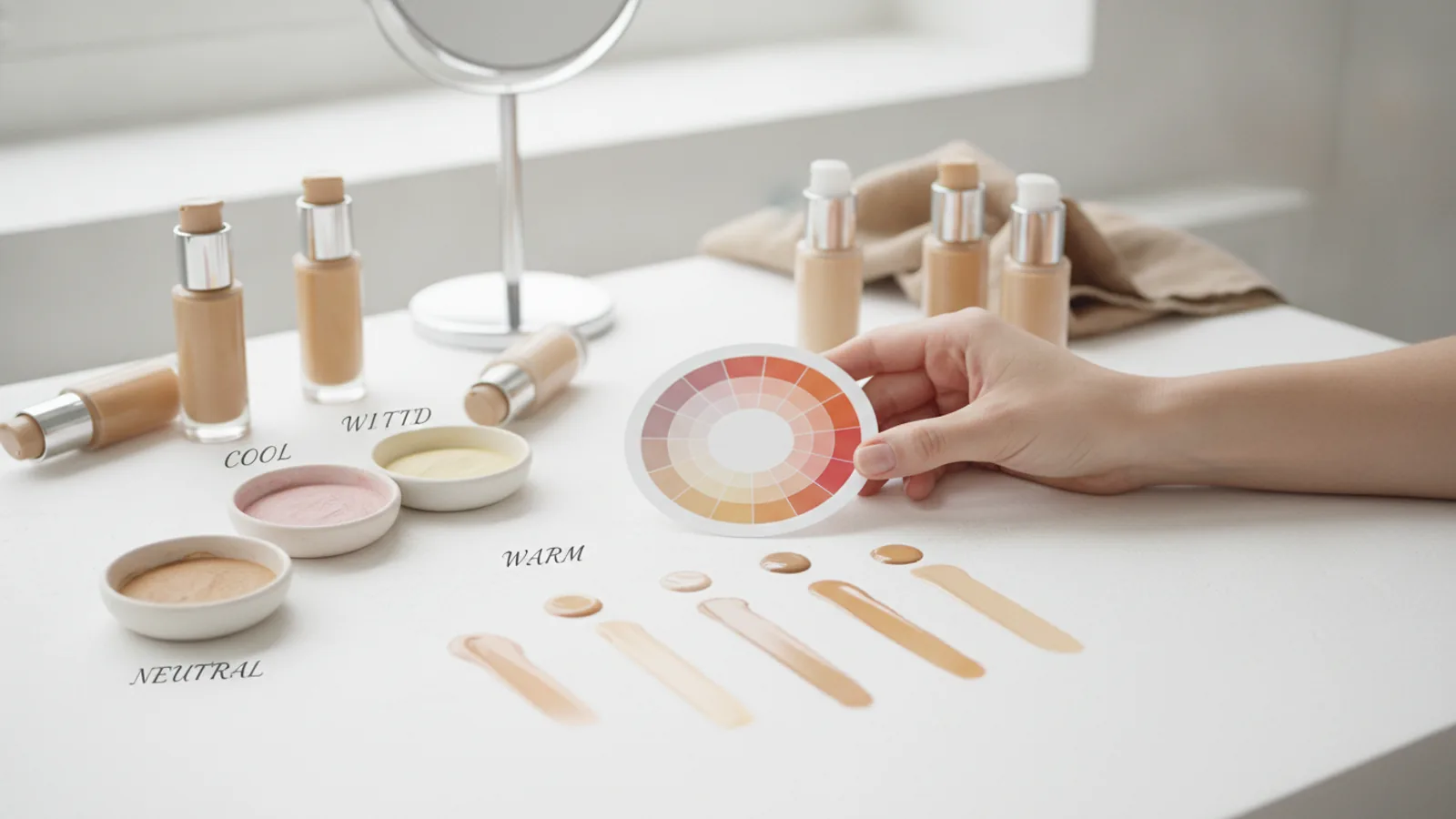
How To Choose Your Foundation Undertone
Finding the right foundation shade can feel like a puzzle, but understanding your skin's undertone is the key to solving it. Your undertone is the subtle, permanent color beneath your skin's surface, which doesn't change with a tan. This guide will walk you through simple, reliable tests you can do at home to discover if your undertone is warm, cool, neutral, or olive. Knowing this will help you choose a foundation that blends seamlessly for a natural, flawless finish.
Fast Answer
- Primary Test: Check your wrist veins in natural light.
- Cool Undertone: Veins appear blue or purple.
- Warm Undertone: Veins appear green.
- Neutral Undertone: Veins are a mix of blue and green.
Before You Start
Before you begin, it’s helpful to understand the difference between your skin tone and your undertone. Skin tone is the surface color of your skin, such as fair, light, medium, tan, or deep. This can change with sun exposure. Your undertone is the subtle color from beneath your skin's surface. It's the consistent hue that always stays the same, and it's what makes a foundation look like a second skin or slightly "off."
What You Need
- A mirror
- A source of natural daylight (like a window)
- A plain white t-shirt or a piece of white paper
- Optional: A piece of gold jewelry and a piece of silver jewelry
Safety, Timing, or Context Checks
- Start with a clean face. Make sure your skin is completely free of makeup, lotions, or serums that could alter its appearance.
- Use natural light only. Artificial lighting, especially yellow or fluorescent lights, can dramatically change how colors look and lead you to the wrong conclusion. The best time is mid-morning or mid-afternoon, near a window with indirect sunlight.
- Ignore surface redness. If you have rosacea, acne, or general surface redness, don't let it confuse you. These are surface conditions, not your underlying tone. Look at the skin on your jawline, neck, or chest for a more accurate reading.
Step-by-Step Instructions
Step 1: Find the Best Lighting
Your first and most important step is to find the right environment. Position yourself near a window where you get bright, indirect natural light. Direct sunlight can wash out your skin, while indoor lighting can cast a yellow, blue, or pink hue that will interfere with your assessment. Stand facing the window so the light evenly illuminates your face and neck.
This simple act of finding good light is more than half the battle. If you can, take a handheld mirror and step outside for a moment into a shaded area on a bright day for the most accurate view of your skin.
Step 2: Check the Color of Your Veins
This is the most common and often most reliable test. With your skin illuminated by natural light, hold your arm out with your palm facing up. Look closely at the veins on the inside of your wrist. What is the primary color you see?
- If your veins appear predominantly blue or purple, you likely have a cool undertone. Your skin has more pink, red, or blue undertones.
- If your veins look green or greenish-blue, you likely have a warm undertone. This is because your yellow-toned skin is layered over your blue-colored veins, making them appear green.
- If you have a hard time telling whether they are blue or green, or if you see a mix of both, you likely have a neutral undertone.
Step 3: Perform the White Paper Test
Grab a piece of stark white printer paper or hold the collar of a pure white t-shirt up to your neck and chest area. The bright white creates a backdrop that can help the subtle hues in your skin stand out more clearly. Avoid off-white or cream-colored items for this test, as they can skew the results.
Now, observe how your skin looks in comparison to the white.
- If your skin looks yellowish, peachy, or golden next to the white, you have a warm undertone.
- If your skin appears pink, rosy, or blueish-red, you have a cool undertone.
- If you don't see a strong cast of either yellow or pink and your skin just looks a bit dull or gray in comparison, you may have a neutral or olive undertone.
Step 4: Use Jewelry to See What Flatters You
If you have both gold and silver jewelry, this can be a helpful clue. In natural light, place a gold necklace or bracelet against your skin, and then do the same with a silver one. Pay attention to which metal makes your skin look healthier, brighter, and more vibrant.
- If gold jewelry brightens your complexion, you likely have a warm undertone.
- If silver, platinum, or rose gold jewelry is more flattering, you probably have a cool undertone.
- If you find that you can wear both gold and silver without one looking significantly better than the other, you are likely a neutral undertone.
This test is subjective, so think about which type of jewelry you receive the most compliments on—it can be a good indicator of what truly complements your skin.
Step 5: Consider Your Skin's Reaction to the Sun
Think about your past experiences with sun exposure (while always remembering to wear sunscreen now!). How does your skin typically react after a day in the sun?
- If you tend to burn easily and rarely tan, you likely have a cool undertone. Your skin has less melanin, which provides some natural protection.
- If you tan easily and seldom burn, you likely have a warm undertone.
- If you sometimes burn and then it fades into a tan, you may have a neutral undertone.
Step 6: Identify a Possible Olive Undertone
An olive undertone is a special category that can be tricky to identify because it's technically a type of neutral undertone. People with olive skin have a natural greenish or grayish hue. It's common in individuals with heritage from the Mediterranean, Middle East, or Latin America, but it can appear in people of all backgrounds.
Signs you might have an olive undertone:
- Foundation often looks too orange or too pink on you.
- Your veins might look distinctly green, but you also burn in the sun.
- You look good in a wide range of colors but find that very warm and very cool shades can look "off."
- Next to a white shirt, your skin might look slightly gray or green.
If this sounds like you, look for foundations labeled as "olive" or choose neutral shades that don't lean too strongly pink or yellow.
Step 7: Put the Clues Together and Swatch Test
Review the results from all the tests. Did one answer appear consistently? If your veins looked green, you tan easily, and gold jewelry flatters you, you can be confident you have a warm undertone. If you had mixed results—for example, your veins look blue but you tan easily—you are most likely in the neutral family.
The final and most definitive test is to swatch foundation shades. Get samples of foundations in the undertone category you believe you fall into. Apply small stripes of two or three different shades along your jawline, letting them extend slightly down to your neck. Do not test on your wrist, as the skin color there is often different from your face.
Wait a few minutes for the foundation to dry and oxidize (deepen in color slightly). The shade that seems to disappear into your skin without any blending is your perfect match.
Quick Reference
| Your Observation | Likely Undertone | Why It Works |
|---|---|---|
| My wrist veins look blue or purple. | Cool | Skin with more red and blue pigments doesn't obscure the natural blue color of veins. |
| My wrist veins look green. | Warm | The yellow pigment in your skin mixes with the blue of your veins, making them appear green. |
| My skin looks pink or rosy next to white paper. | Cool | The stark contrast of white highlights the subtle red and blue tones in your skin. |
| My skin looks yellow or golden next to white paper. | Warm | The contrast with white makes the underlying peach and yellow tones more apparent. |
| Silver jewelry makes my skin "pop." | Cool | Silver complements the cooler tones in the skin without creating a clashing effect. |
| Foundation often looks too pink or too orange on me. | Neutral or Olive | This happens when a foundation is too cool (pink) or too warm (orange) for skin that falls in the middle. |
Common Problems When You Choose Your Foundation Undertone
- Problem: My foundation looks orange or muddy by the end of the day.
Solution: This usually means the foundation is too warm for your skin tone, or it has oxidized significantly. Try a shade with a more neutral or cool undertone. You can also try using a primer, which can create a barrier between your skin's oils and the foundation, reducing oxidation. - Problem: My foundation looks ashy, gray, or chalky.
Solution: The shade is likely too light for your skin tone and too cool for your undertone. Try a foundation with a warmer (more golden or peachy) undertone. If the depth seems right, look for the same level shade but in the "Warm" or "Neutral" family instead of "Cool." - Problem: I have redness from rosacea or acne and can't see my undertone.
Solution: Ignore the areas of redness. Look at the skin along your jawline, on your neck, or on your chest, as these areas are usually less affected by surface flushing. Match your foundation to these areas for a seamless blend from face to neck. - Problem: I'm in between undertones. Nothing seems quite right.
Solution: You are likely a true neutral or an olive. Look for foundations specifically labeled "Neutral." You might also have success by mixing two different foundations—one slightly warmer and one slightly cooler—to create your own perfect custom shade.
Advanced Tips for a Perfect Match
- Consider Your Neck and Chest: For the most natural look, your foundation should create a seamless transition from your face to your neck. If your face is naturally a bit darker or redder than your neck, always choose the shade that matches your neck and chest. This will unify your overall complexion.
- Seasonal Shade Adjustments: Your surface skin tone may change from winter to summer. It can be helpful to have two different shades of your favorite foundation—a lighter one for winter and a slightly deeper, warmer one for summer. You can also mix them during the transitional spring and fall months.
- Decode Foundation Names: Many brands use a lettering system to help you find your undertone. While it varies, the system often looks like this:
- C: Cool (for pink, red, or blueish undertones)
- W: Warm (for yellow, golden, or peachy undertones)
- N: Neutral (a balance between cool and warm)
- Some brands use other letters, like R for Rosy (cool), Y for Yellow (warm), or P for Peach (warm). Understanding this code can help you quickly narrow your options.
How To Choose Your Foundation Undertone FAQ
Can my undertone change over time?
No, your undertone is determined by genetics and remains constant throughout your life. Your surface tone can change due to sun exposure, aging, or skin conditions, but the underlying cool, warm, or neutral hue will not change.
What is the biggest mistake people make when choosing a foundation?
The most common mistake is testing foundation in the wrong lighting. The second is testing on the back of the hand or wrist. The skin on your hand is a different color and texture than your face. Always test directly on your jawline in natural daylight for an accurate match.
Is an olive undertone warm or cool?
It's generally considered a neutral-to-warm undertone that has a unique green or grayish cast. People with olive skin can often wear colors from both the warm and cool palettes but look especially good in neutral and earthy tones. They should avoid foundations that are overly pink or orange.
My hair color is warm, but my skin seems cool. Which should I follow?
Always trust the results from your skin tests over your hair or eye color. While there are general correlations (e.g., ash blonde hair with cool skin), they are not strict rules. Your skin's reaction to the vein, paper, and jewelry tests is a far more reliable indicator of your true undertone.
Final Checklist for Choosing Your Foundation Undertone
- Find a spot with bright, indirect natural daylight.
- Start with a clean, makeup-free face.
- Check the veins on your wrist: Are they blue, green, or a mix?
- Hold a white piece of paper to your neck: Does your skin look yellow, pink, or neither?
- Compare gold and silver jewelry against your skin: Which one is more flattering?
- Consider your skin's reaction to sun: Do you burn, tan, or both?
- Analyze your results to determine if you are Cool, Warm, Neutral, or Olive.
- Get foundation samples and swatch them on your jawline to find the perfect match.