
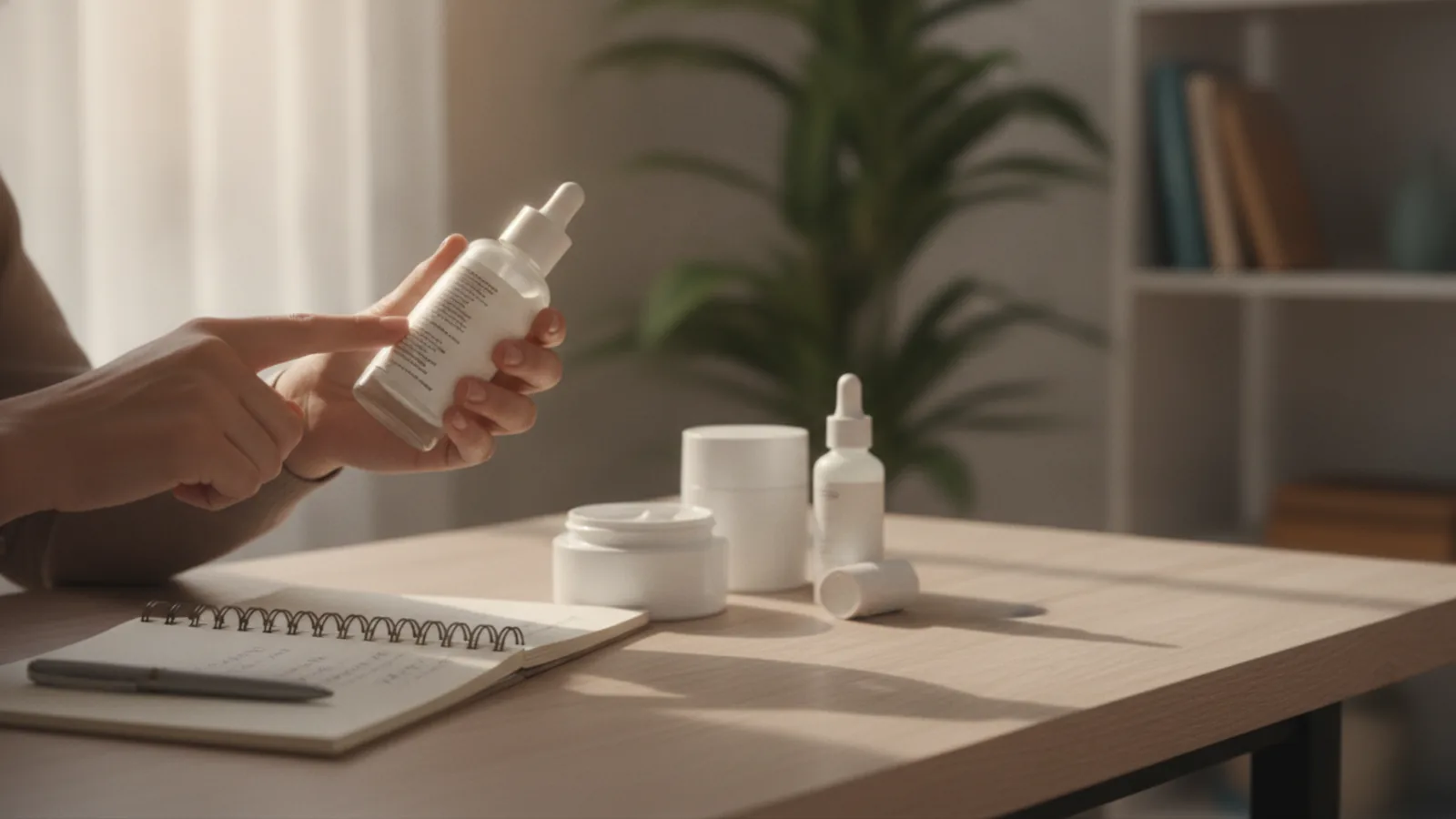
How To Read Skincare Product Ingredients
Learning how to read skincare product ingredients can feel like decoding a secret language, but it's the most powerful tool you have for choosing products that truly work for you. This guide helps you understand what's inside the bottle, so you can avoid potential irritants, find effective formulas, and spend your money wisely. By looking past the marketing claims on the front, you can make informed choices that support your skin's health and your personal care routine.
Fast Answer
- Focus on the first five: These ingredients make up most of the formula.
- Order matters: Ingredients are listed from highest concentration to lowest.
- Spot your triggers: Scan for common irritants like "Fragrance" or "Alcohol Denat." if you have sensitive skin.
- Check the symbols: Look for the open jar icon (PAO symbol) to see how long the product lasts after opening.
Before You Start
Gathering a few simple things will make deciphering ingredient lists much easier. This process is about building a habit of mindful curiosity, not becoming a chemist overnight.
- A skincare product: Grab any lotion, serum, or cleanser you have on hand that you want to understand better.
- Good lighting: Ingredient lists are often printed in tiny font, so good light is essential.
- Your smartphone or computer: You'll need it for quick searches of unfamiliar ingredient names.
- Know your skin type: Having a general idea of whether your skin is oily, dry, combination, sensitive, or acne-prone will help you identify which ingredients to look for or avoid.
Step-by-Step Instructions
Find the Official Ingredient List
First, locate the ingredient list on the product's packaging. It's usually on the outer box or on the back of the bottle or tube itself. It might be labeled "Ingredients" or "INCI." INCI stands for International Nomenclature of Cosmetic Ingredients, which is a standardized system for naming ingredients used worldwide. This ensures that an ingredient like water is called "Aqua" everywhere, creating consistency.
The text can be very small. Don't be afraid to use your phone's camera to take a picture and zoom in. This simple trick can save you from eye strain and make the whole process more comfortable.
Understand the Order of Concentration
This is the most important rule of reading an ingredient list: ingredients are listed in descending order of concentration. The ingredient with the highest amount comes first, followed by the next highest, and so on. The first five to seven ingredients typically make up 80% or more of the entire formula.
This means you should pay the most attention to the top of the list. If a product advertises a wonderful botanical extract but you find it at the very end of a long list, it means there's very little of it in the product.
There's one exception to this rule. Ingredients present at a concentration of 1% or less can be listed in any order after the ingredients present at more than 1%. This part of the list often includes preservatives, colorants, and potent active ingredients that are effective in tiny amounts.
Identify the Main Players and "Hero" Ingredients
The front of the bottle highlights the "hero" ingredients—the ones the brand wants you to notice, like "Hyaluronic Acid" or "Vitamin C." Your job is to play detective and see where these ingredients fall on the list.
For an ingredient to be effective, it often needs to be present in a meaningful concentration. If the advertised hero ingredient is in the top half of the list, that's a good sign. If it's near the very bottom, its effect may be minimal. For example, if a product is called a "Vitamin C Serum," you would hope to see a form of Vitamin C (like Ascorbic Acid or Sodium Ascorbyl Phosphate) high up on the list, not buried at the end.
Spot Potential Irritants and Unnecessary Additives
Just as you look for good ingredients, you should also scan for ones that might not agree with your skin. This is highly personal, as one person's irritant is another's holy grail. However, some common culprits are worth knowing.
- Fragrance (Parfum): This is a major cause of sensitivity and allergic reactions. Brands can hide dozens of chemicals under the single term "Fragrance." If you have sensitive skin, it's often best to choose products labeled "fragrance-free."
- Drying Alcohols: Look for Alcohol Denat., SD Alcohol, or Isopropyl Alcohol, especially high on the list. These can strip the skin's natural moisture barrier, leading to dryness and irritation. Note that not all alcohols are bad; "fatty alcohols" like Cetyl Alcohol or Stearyl Alcohol are actually moisturizing.
- Essential Oils: While they come from plants, oils like lavender, peppermint, and citrus oils can be very irritating for many people, especially those with sensitive skin or rosacea.
Also, consider fillers or texture enhancers like silicones (look for names ending in "-cone," like Dimethicone). They aren't harmful, but they primarily affect how a product feels on the skin. Some people love the silky finish they provide, while others prefer to avoid them.
Decode Complex Names with a Quick Search
The scientific INCI names can be intimidating. You're not expected to memorize them. Instead, get comfortable with looking them up. When you see a long, unfamiliar name in the first ten ingredients, do a quick search.
Websites like INCI Decoder or the Paula's Choice Ingredient Dictionary are excellent, user-friendly resources. They break down what an ingredient is, what it does, and whether it's beneficial or potentially irritating. For example, a quick search will tell you that "Tocopherol" is Vitamin E (an antioxidant) and "Sodium Hyaluronate" is a form of Hyaluronic Acid (a humectant that hydrates skin).
Check the Packaging for Important Symbols
Beyond the ingredient list, the packaging itself holds valuable clues about the product's use and lifespan. Look for these common symbols:
- Period After Opening (PAO): This looks like a small open jar with a number followed by an "M" (e.g., "12M"). It tells you how many months the product is safe and effective to use after you've opened it. This is crucial for products with active ingredients that can degrade over time.
- Cruelty-Free Bunny: Symbols like the Leaping Bunny logo indicate that the product and its ingredients were not tested on animals.
- Recycling Symbol: The universal recycling symbol (three chasing arrows) indicates that the packaging is recyclable. Sometimes there's a number inside that specifies the type of plastic.
Paying attention to these symbols helps you use your products safely and dispose of them responsibly, contributing to a more mindful personal care routine.
Common Problems When You Read Skincare Product Ingredients
Even with the right steps, you might run into a few confusing situations. Here are some common hurdles and how to navigate them.
The "Hero" Ingredient Is Last on the List
You bought a serum because it advertised chamomile, but you find "Chamomilla Recutita (Matricaria) Flower Extract" at the very end of a 30-ingredient list. This means its concentration is very low, likely under 1%. While some ingredients are effective at low doses (like certain peptides), for most botanicals or vitamins, this suggests it's included more for marketing than for effect. You may want to look for a different product where that ingredient is featured more prominently.
Seeing Alcohol on the List
Panic can set in when you see "alcohol" on a label, but it's important to know the difference between types. Simple, drying alcohols like Alcohol Denat. or SD Alcohol can be harsh, especially for dry skin. However, fatty alcohols like Cetyl, Stearyl, and Cetearyl Alcohol are waxy substances that act as emollients, helping to soften and smooth the skin. They are beneficial and have a completely different effect.
"Natural" vs. "Chemical" Sounding Names
It's easy to assume that an ingredient you can't pronounce is bad and that a plant-based one is good. This is a common misconception. "Natural" doesn't mean safe (poison ivy is natural), and "chemical" doesn't mean harmful (water is a chemical). Many highly effective and gentle ingredients, like Hyaluronic Acid and Niacinamide, are created in a lab. Judge an ingredient by its function and safety data, not by how its name sounds.
Advanced Tips for Reading Skincare Ingredients
Once you're comfortable with the basics, you can add a few more layers to your analysis to become even more discerning.
- Use Preservatives as a Guidepost: Preservatives like Phenoxyethanol or parabens are almost always used at a concentration of 1% or less. This means any ingredient listed after them is also present at less than 1%. This is the best trick for estimating the concentration of those hero ingredients.
- Understand Different Forms of an Ingredient: An ingredient like Vitamin C comes in many forms. L-Ascorbic Acid is the most potent and well-researched, but it's also unstable and can be irritating. Gentler, more stable derivatives include Sodium Ascorbyl Phosphate and Tetrahexyldecyl Ascorbate. Knowing the difference helps you choose a product that suits your skin's tolerance level.
- Identify Ingredient Complexes: Sometimes a brand uses a trademarked ingredient complex, like "Matrixyl 3000." On the list, this will appear as its base components, such as "Glycerin, Water, Butylene Glycol, Carbomer, Polysorbate 20, Palmitoyl Tripeptide-1, Palmitoyl Tetrapeptide-7." A quick search for the trade name can reveal the powerful active ingredients hidden within.
Quick Reference
| If Your Goal Is... | Look For These Ingredients | Why They Work |
|---|---|---|
| Hydration | Glycerin, Hyaluronic Acid (Sodium Hyaluronate), Panthenol (Vitamin B5), Aloe Vera | These are humectants; they draw moisture from the air into your skin. |
| Brightening | Vitamin C (Ascorbic Acid), Niacinamide, Azelaic Acid, Licorice Root Extract | They inhibit pigment production and fade dark spots, leading to a more even skin tone. |
| Soothing and Calming | Centella Asiatica (Cica), Allantoin, Chamomile, Green Tea Extract, Colloidal Oatmeal | These ingredients have anti-inflammatory properties that help reduce redness and irritation. |
| Anti-Aging / Firming | Retinoids (Retinol, Retinal), Peptides, Antioxidants (Vitamin E, Ferulic Acid) | They stimulate collagen production, protect against environmental damage, and improve skin texture. |
How To Read Skincare Product Ingredients FAQ
What's the difference between "fragrance-free" and "unscented"?
Are "natural" or "organic" ingredients always better?
How can I tell the exact percentage of an ingredient?
What does "dermatologist-tested" actually mean?
Final Checklist for Reading Skincare Ingredients
Before you make your next skincare purchase or decide to use a new product, run through this quick mental checklist to ensure it aligns with your goals.
- Check the Top Five: Did you review the first five ingredients to understand the product's base and main components?
- Locate the Hero: Is the key ingredient you're interested in located high enough on the list to be effective?
- Scan for Irritants: Did you check for any of your known personal triggers, like fragrance, drying alcohols, or specific oils?
- Look Up the Unknown: Did you do a quick search for any prominent ingredients whose function you don't know?
- Note the Expiration: Did you find the Period After Opening (PAO) symbol to know how long the product will last?
- Plan a Patch Test: Do you have a plan to patch test the product before applying it all over your face?
By consistently applying these steps, you empower yourself to build a skincare routine that is thoughtful, effective, and perfectly tailored to you.