
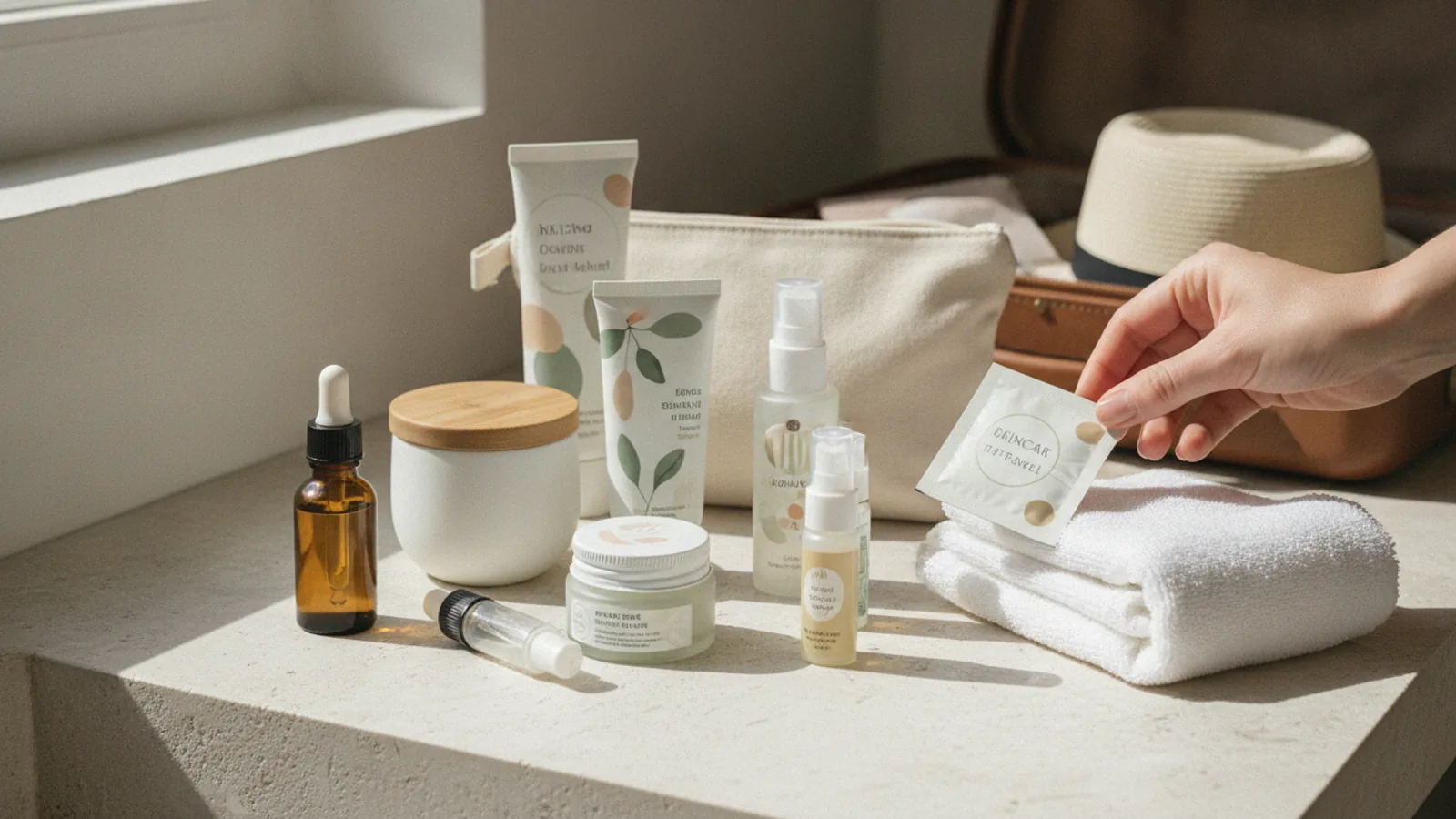
Skincare Routine For Travel
Maintaining your skin's health while traveling doesn't have to be complicated. This guide walks you through creating a simplified yet effective skincare routine for travel, ensuring your skin stays calm and happy no matter where you go. We'll cover everything from how to smartly pack your essentials to adjusting your routine on the go. This approach helps prevent common travel-related skin issues like dryness, breakouts, and irritation, so you can focus on enjoying your trip.
Fast Answer
- Key principle: Simplify your routine to core products and decant them into travel-sized containers (under 3.4oz/100ml) to meet airline regulations and save space.
Before You Start
Gathering a few key items before you start packing will make the process smooth and stress-free. The goal is to create a compact, leak-proof kit that has everything you need and nothing you don't.
- Your core skincare products: Cleanser, moisturizer, and sunscreen are the non-negotiables.
- Travel-sized containers: Reusable silicone or plastic bottles, jars, and spray bottles under 3.4 ounces (100 ml).
- A waterproof toiletry bag: To contain any potential leaks and keep your skincare organized.
- Labels or a permanent marker: To clearly mark what's in each container.
- Solid skincare alternatives: Consider cleanser bars, solid serums, or moisturizer sticks to save space and avoid liquid limits.
- A clear, quart-sized bag: For your liquids if you're flying with a carry-on.
Step-by-Step Instructions
Assess Your Destination and Trip Duration
Your travel skincare routine starts with considering where you're going and for how long. The climate, water quality, and length of your stay will influence which products you need. Is your destination hot and humid, cold and dry, or sunny and tropical? A humid climate might call for a lighter, gel-based moisturizer, while a dry one requires a richer cream.
For a short weekend trip, you'll need much less product than for a two-week vacation. Estimate how much product you use daily to help you decide on the right size containers. This initial planning prevents both overpacking and running out of your essentials mid-trip.
Audit and Simplify Your At-Home Routine
Now is the time for gentle minimalism. Look at your current skincare routine and identify the absolute essentials. Most dermatologists agree that a core routine consists of three simple steps: cleanse, moisturize, and protect (with sunscreen). These are your non-negotiables.
Next, consider any targeted treatments you can't go without, like a specific serum for hydration or a spot treatment for breakouts. Leave behind the occasional-use masks, toners, and multiple serums. Travel is about simplifying, and your skin will likely appreciate the break. The goal is to maintain your skin's health, not to perform a complex, multi-step ritual.
Decant Products into Travel-Sized Containers
Bringing full-sized products is rarely practical. They take up precious luggage space and often exceed airline liquid allowances for carry-on bags. Instead, invest in a set of high-quality, reusable travel containers. Silicone squeeze bottles are great for cleansers and lotions, while small pots or jars are perfect for thick creams and eye creams.
Carefully transfer your chosen products into these containers. Don’t overfill them, as pressure changes in an airplane cabin can cause them to expand and leak. Leave a little air at the top. Once filled, label every single container clearly. You don't want to mix up your eye cream and your spot treatment.
Embrace Solid and Waterless Formats
One of the easiest ways to navigate TSA liquid rules is to avoid liquids altogether. The market for solid toiletries has grown, and you can find excellent options for many of your needs. Consider a solid cleansing bar, a moisturizer stick, or a solid perfume. These products are spill-proof, space-saving, and don't count towards your liquid allowance.
You can also find products in powder form, such as cleansing powders that activate with water. Makeup-remover wipes or reusable makeup-remover cloths also eliminate the need for a liquid cleanser. Swapping even one or two liquid products for solids can make a huge difference in your packing.
Plan Your In-Flight Skincare
Airplane cabins are notoriously dry, with humidity levels far lower than on the ground. This can leave your skin feeling tight and dehydrated. To combat this, prepare a small, accessible kit for your personal item. Before or during the flight, focus on hydration.
A simple in-flight routine could be: wiping your face with a gentle micellar water pad, applying a hydrating serum (like one with hyaluronic acid), patting on a layer of moisturizer, and finishing with a lip balm. A hydrating facial mist can also provide a refreshing boost throughout the flight. Avoid heavy makeup, which can clog pores and feel uncomfortable in the dry air.
Pack Your Toiletry Bag Strategically
How you pack is almost as important as what you pack. To prevent leaks, add a small piece of plastic wrap under the cap of your bottles before screwing the lid on tightly. Then, place all liquids together in a dedicated, waterproof, and transparent bag. If you are flying with a carry-on, this must be your quart-sized, clear TSA-approved bag.
Keep this bag easily accessible at the top of your carry-on luggage, so you can quickly remove it at the security checkpoint. Pack non-liquid items like solid bars, cotton pads, and makeup brushes separately to keep them dry and clean.
Adjust Your Routine Upon Arrival
Once you've arrived, give your skin a day or two to acclimate. The first evening, perform a gentle but thorough cleanse to remove travel grime. Follow up with a focus on hydration and repair. A simple hydrating serum and a nourishing moisturizer are perfect.
Pay attention to how your skin feels. If the new climate is making your skin oilier than usual, you might use your moisturizer more sparingly. If it feels tight and dry, you might add an extra layer of moisturizer or a facial oil at night. Be prepared to listen to your skin and make small adjustments rather than sticking rigidly to your at-home routine.
Quick Reference
| Situation | Use this | Why |
|---|---|---|
| Dry, recirculated plane air | Hydrating mist and lip balm | Instantly replenishes surface moisture and prevents chapped lips. |
| Unexpected breakout | Pimple patches or spot treatment | Provides targeted treatment without irritating the surrounding skin. |
| Increased sun exposure | Broad-spectrum SPF 30+ | Sun protection is the most critical step to prevent damage and aging. |
| Feeling grimy after a long travel day | A gentle, effective cleanser | Removes sweat, oil, and pollutants without stripping the skin's barrier. |
| Skin reacting to hard water | Micellar water on a cotton pad | Cleanses effectively without needing harsh tap water, preserving skin balance. |
Common Problems When You Plan a Skincare Routine for Travel
Product Leaks and Spills
This is a traveler's worst nightmare. The main culprits are often pressure changes and loose caps. To prevent this, never fill your containers to the very top. Always ensure caps are screwed on tightly, and for extra security, use the plastic-wrap-under-the-cap trick. Storing everything in a high-quality, zip-top waterproof bag ensures that even if a leak happens, it's contained.
Breakouts and Irritation
Travel can be stressful for skin. Changes in diet, sleep patterns, climate, and water can all trigger breakouts. The key is not to panic and attack your skin with harsh treatments. Stick to your gentle, simplified routine. Carry a trusted spot treatment for emergencies. Most importantly, ensure you are cleansing your face thoroughly every evening to remove sunscreen, sweat, and environmental pollutants from the day.
TSA and Liquid Restrictions
Navigating airport security can be confusing. The rule for carry-on luggage in most places (including the U.S.) is the 3-1-1 rule: liquids must be in containers of 3.4 ounces (100 ml) or less, all containers must fit inside 1 clear, quart-sized bag, and each passenger is allowed only 1 of these bags. To avoid having to discard products, measure your containers beforehand and always use the designated clear bag.
Advanced Tips for Your Skincare Routine for Travel
Pack a Mini Facial Experience
If you have a little extra room, consider bringing a single-use sheet mask or a small decanted amount of a hydrating or calming mask. After a long flight or a day in the sun, taking 15 minutes to relax with a mask can do wonders for your skin's hydration and overall appearance. It’s a small touch of self-care that can make your trip feel more restorative.
Double-Cleansing on the Go
If you wear heavy sunscreen or makeup, double-cleansing is just as important on vacation. You don't need to pack two separate cleansers. A solid cleansing balm is a perfect first step, as it's travel-friendly and effective at melting away makeup and SPF. You can then follow up with your regular gentle gel or cream cleanser.
Use Sunscreen as Your Daily Moisturizer
To further streamline your routine, look for a hydrating sunscreen formula. Many modern sunscreens are formulated with ingredients like hyaluronic acid and glycerin, making them moisturizing enough to double as your morning lotion, especially in warmer climates. This combines two essential steps into one, saving you time and space.
Skincare Routine For Travel FAQ
Can I just buy skincare at my destination?
You can, but it comes with risks. You may not be able to find your preferred brands, and products in other countries can have different formulations. Trying new products while traveling can also lead to unexpected skin reactions. It's generally safer and more reliable to bring your own tried-and-true essentials.
How do I keep my skin hydrated on a long-haul flight?
Start by drinking plenty of water. On the plane, use a hydrating facial mist, apply a layer of a simple hydrating serum, and seal it in with a good moisturizer. Don't forget lip balm. Avoid alcohol and excessive caffeine, as they can be dehydrating.
What if my skin has a bad reaction to something?
If you experience irritation, simplify your routine immediately. Go back to the absolute basics: a very gentle cleanser, a simple, fragrance-free moisturizer, and sunscreen. Avoid all active ingredients like retinoids or exfoliating acids until your skin has calmed down. Having a small tube of a soothing balm can also be helpful for isolated patches of irritation.
How far in advance should I pack my skincare?
It’s a good idea to prepare your travel skincare kit a few days before your trip. This gives you time to decant everything without rushing and allows you to realize if you're running low on a key product. Packing at the last minute is a recipe for forgetting something important.
Final Checklist for Your Skincare Routine for Travel
- Assess your destination: Have you considered the climate and your trip's length?
- Simplify your products: Did you narrow your routine down to the core essentials (cleanse, moisturize, protect)?
- Decant into travel sizes: Are all liquids in containers 3.4oz (100ml) or smaller?
- Label everything: Is every bottle, jar, and pot clearly marked?
- Consider solids: Have you swapped any liquids for solid alternatives to save space?
- Prepare an in-flight kit: Do you have a small bag with hydration essentials for the plane?
- Pack for security: Are all your carry-on liquids together in one clear, quart-sized bag?
- Protect from leaks: Did you add plastic wrap under lids and secure everything in a waterproof bag?
- Include your SPF: Is sunscreen packed? This is the most important anti-aging and skin health product you can bring.